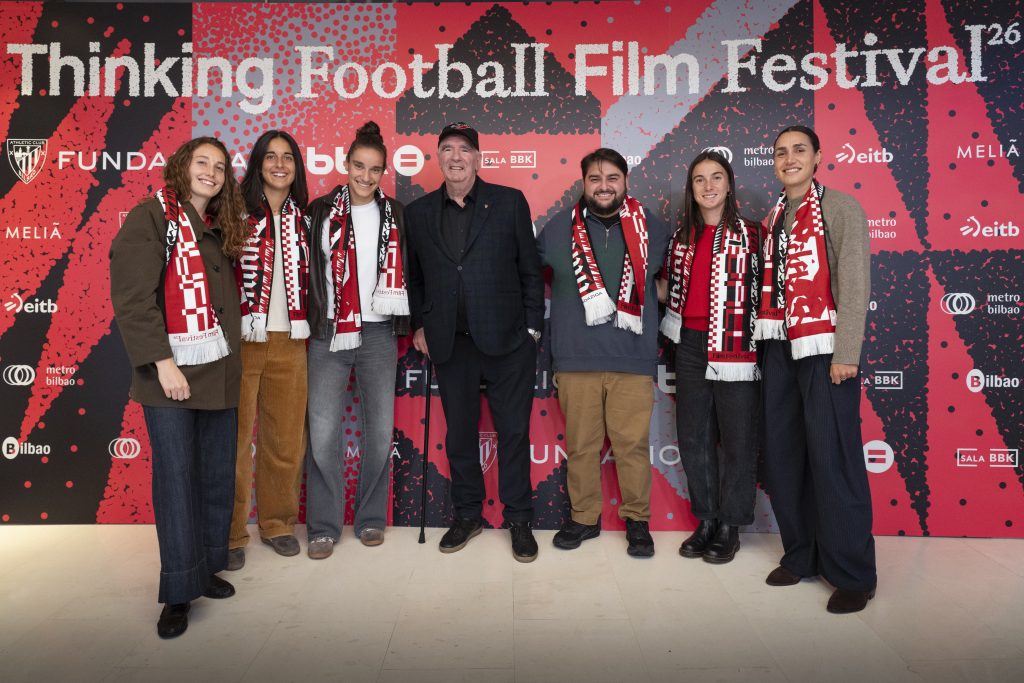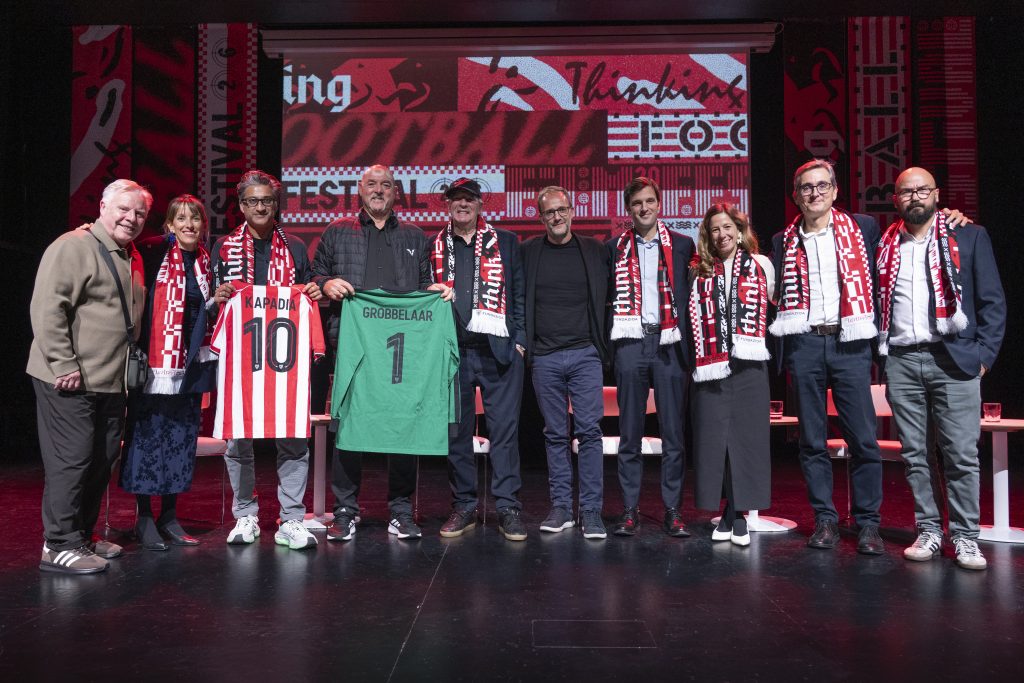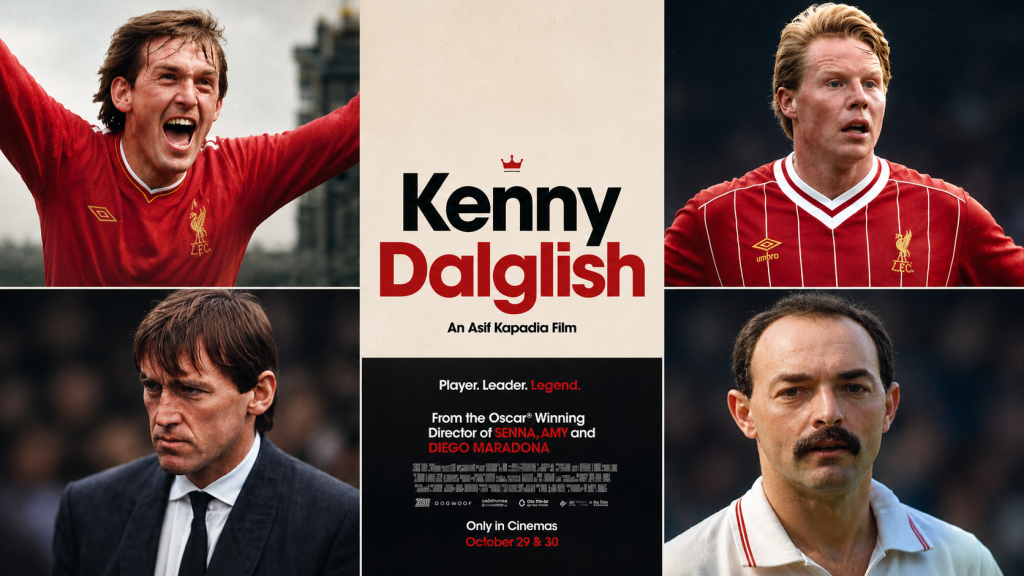
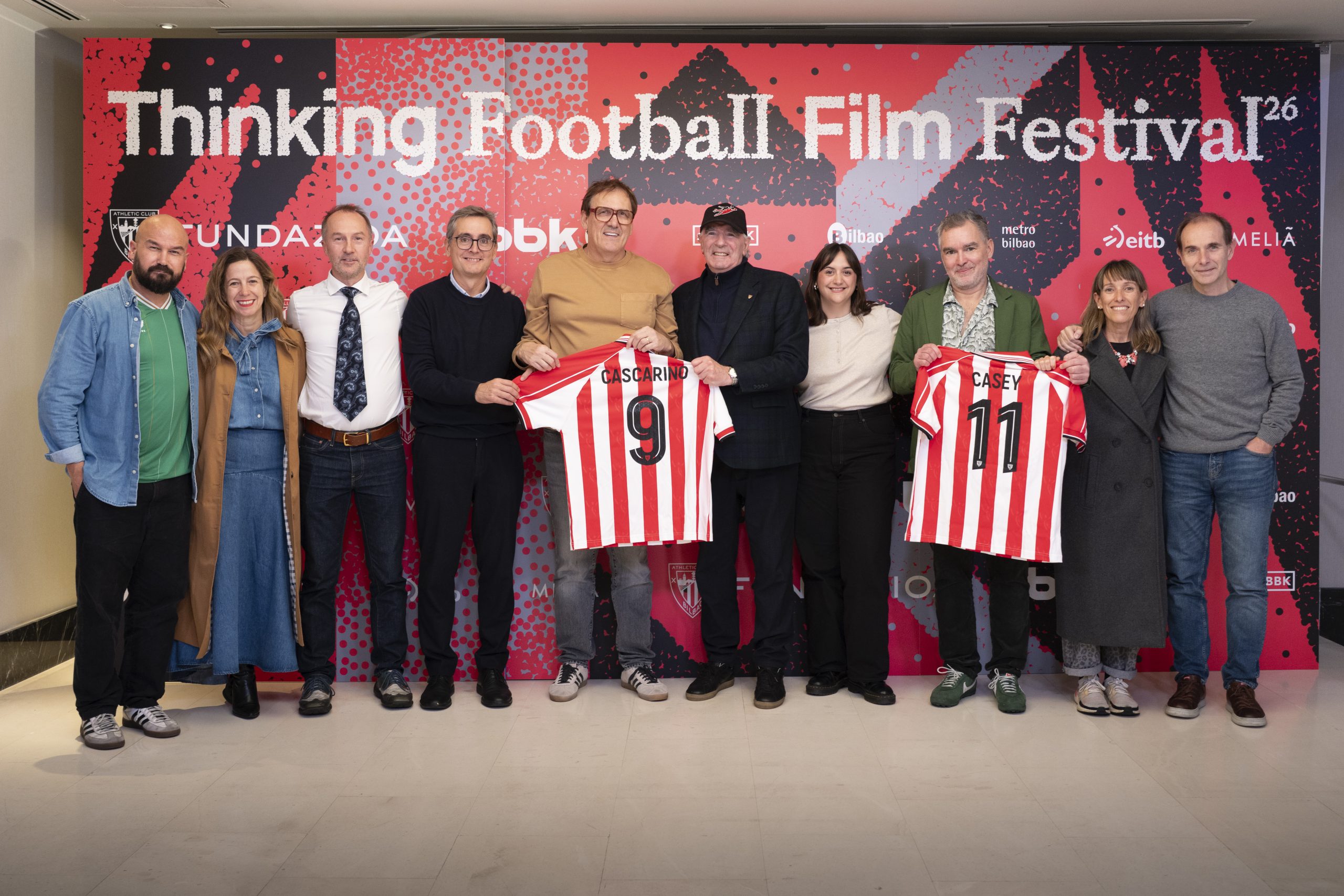
Thinking Football Day 3 brought us an honest insight into Tony Cascarino and an existential road movie featuring a jigsaw puzzle of the Germany vs Austria match from Argentina ’78
Part of Thinking Football’s identity, as its name suggests, is to screen films that make you think. Galder Reguera, director of the Athletic Club Foundation’s festival, was clear about this right from the very first edition 14 years ago.
That is why Galder has always shunned documentaries designed to glorify their subjects, opting instead for those that reflect both the highs and lows of the stars’ lives.
‘Tony Cascarino: Extra Time’, Sean Casey’s film screened during Thursday’s first session, offers an honest portrait of the striker who was part of a legendary Irish side at the 1990 World Cup in Italy (memories which bring to mind Stephen Frears’ film ‘The Van’).
Cascarino debunked one of the most common clichés spouted by footballers, “Nobody has given me anything for free”, and replaced it with a thought-provoking statement: “Luck is a footballer’s greatest superpower.” Thought-provoking, precisely because it gives you food for thought.
Cascarino does admit that everyone must forge their own path, of course, but only to a certain extent, “because things happen”. You have to be ready when the train comes along, but the train has to come along! This is a reflection born of Cascarino’s own erratic career – a rollercoaster of successes and failures, so often shaped by factors beyond his control.
Galder Reguera brought the issue up in the context of Athletic during the discussion, with an interesting question: What would have happened to Unai Simón if Kepa Arrizabalaga hadn’t signed for Chelsea? What if club president Josu Urrutia had allowed Alex Remiro to play without renewing his contract, at least until Iago Herrerín had recovered? The Athletic fans at the Sala BBK were shaken just by the thought that Unai Simón might not have had the chance to become the player he is today: a unique footballer, not only because he is the best goalkeeper in the world, but because he loves Athletic and represents the club in the best possible way.


“It’s important to find a community”
Following the screening of Sylvie Hohlbaum’s short film ‘Kutte’, it was time for one of Thinking Football’s occasional gems. ‘360 pieces’, directed by Johannes Stjärne Nilsson, and starring Olle Sarri, is a quirky, existential road movie centred on a rather strange puzzle: a moment that ended in an own goal between Sepp Maier and Berti Vogts in the 2-3 Germany vs Austria match at the 1978 World Cup in Argentina.
The match that is remembered in Germany as ‘the shame of Córdoba’ and in Austria as ‘the miracle of Córdoba’.
The protagonist, accompanied by the director — who also took on an acting role — sets off on a journey to uncover the meaning behind a most peculiar jigsaw puzzle, which was produced by a German manufacturer and based on a photograph that is entirely atypical in the world of jigsaw puzzles.
It matters little that by the end of the film we still do not know the jigsaw’s origin, because in reality it is nothing more than a device for exploring the meaning of life.
And it is there that Johannes, moving from one metaphor to the next, discovers a truth: for life to have meaning, it is important to find a community, a family, a place where you can be yourself.
It doesn’t matter whether it’s a community of puzzle-loving geeks or one made up of a football club supporters. Ultimately, it’s the sense of belonging that matters – something we at Athletic Club know all about.


Friday 13: “Beacon of Hope: The Grenfell Athletic Story” (18:00) and “The Match” (20:00)
On Friday evening, Thinking Football has scheduled two films that explore football’s social and cultural ramifications.
“Beacon of Hope: The Grenfell Athletic Story”, directed by Theo Lee Ray, tells the story of how Grenfell Athletic, a club founded in the wake of the Grenfell Tower tragedy, became a rallying point and a symbol of hope for a community marked by loss.
At 20:00, we’ll screen “The Match”, a documentary that reconstructs the historic quarter-final clash between Argentina and England at the 1986 World Cup. Through previously unseen footage and testimonies from those involved, the film explores how that match transcended sport to become one of the most iconic moments in the history of football.

 Cinema